
Background
Tony lived a vibrant, fully independent life beforehand, possessing great skill as a traditional guitar maker who frequently met and built instruments for iconic 1960s groups like The Beatles and The Rolling Stones. Following a diagnosis of dementia, Tony began facing challenges at home. One of the primary risks identified was that he was missing his essential medications or failing to take them at the correct times, which left tablets scattered around his living space and compromised his health.
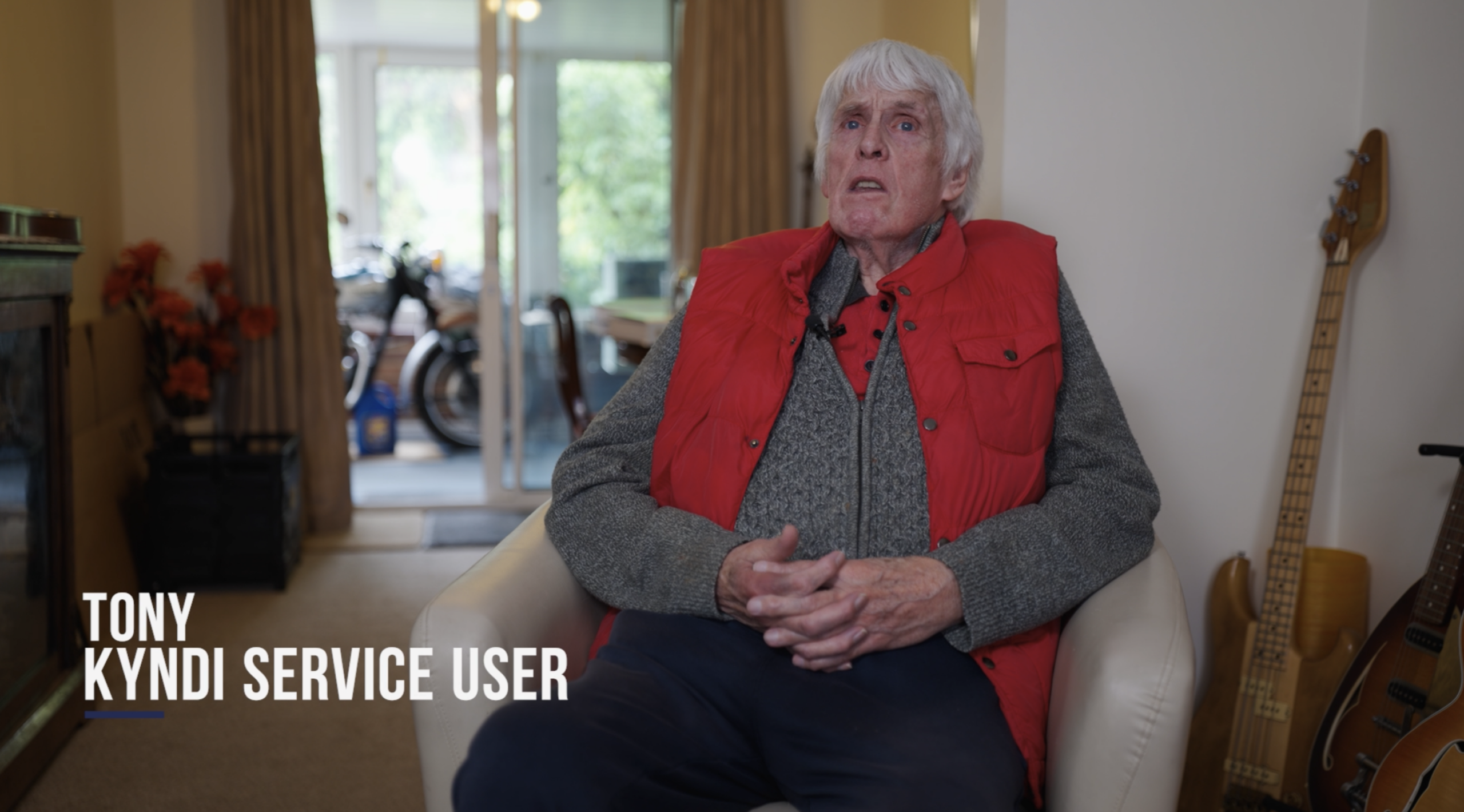
Watch Tony explain how these tools work in practice
Intervention
Following a referral from the hospital or community team, Kyndi conducted a comprehensive assessment of Tony’s home environment. To promote his independence and address the medication compliance issues, Kyndi initially implemented an Evondos automated medication dispenser.
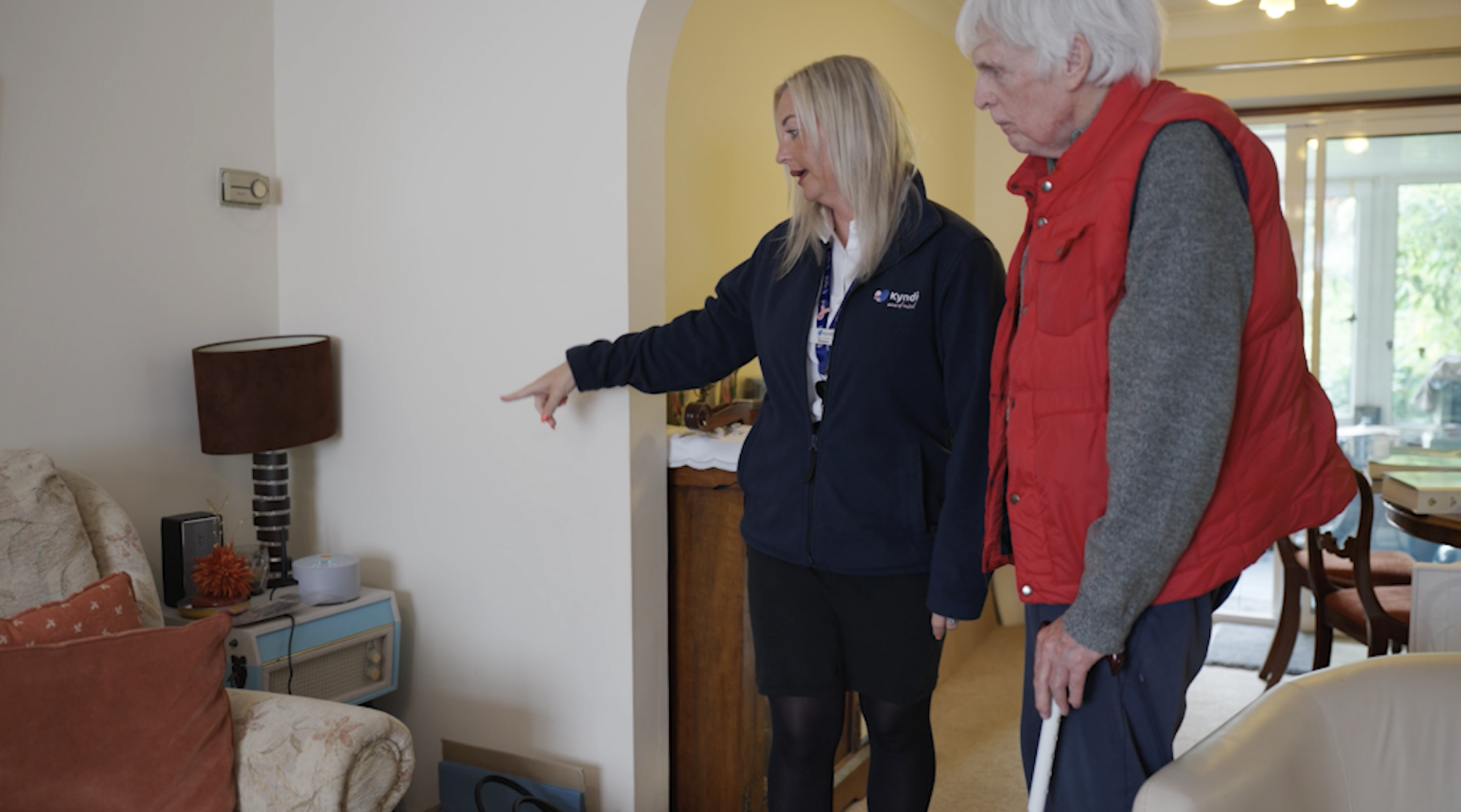
Later, following a subsequent hospital admission and discharge, Kyndi layered his care by installing Activities of Daily Living (ADL) sensors to monitor his routines, alongside a wearable falls detector that Tony could wear on his wrist or around his neck.
This multiple-device ecosystem proved vital when Tony unfortunately suffered a fall upstairs. Because he missed his scheduled medication window, the Evondos dispenser triggered an immediate alert to the care team. Kyndi staff cross-referenced the ADL sensor dashboard, noticed Tony had entered a room but had not exited, and were able to immediately attend the property, discover the fall, and safely coordinate hospital care.
Impact Measurement
- Independence: The combination of devices allows Tony to remain living safely and independently in his own home rather than moving into a restrictive residential care setting.
- Safety & Peace of Mind: Tony feels highly secure both inside and outside the home, knowing a proactive safety net is monitoring his well-being.
- Medication Compliance: The automated dispenser completely eliminated his forgetfulness regarding tablets, ensuring consistent medical stability.
- Social Impact: Tony’s family and support network have complete reassurance that emergencies are flagged in real-time, allowing them to support his desire to stay at home. Tony himself notes that the technology is “very handy to have” and provides immediate reassurance when he goes out.
Conclusion
Tony’s experience demonstrates the incredible power of utilising multiple, interconnected assistive technology tools rather than a single device. The seamless integration of medication management, motion sensors, and fall detection has successfully preserved Tony’s autonomy, allowing a highly skilled individual to live safely and happily where he wishes to be.
For more information
For more information on the Evondos Automated Medication System, ADL sensors, and how connected care can benefit you or your loved ones, please contact Rob.Kennedy@kyndi.co.uk.


